


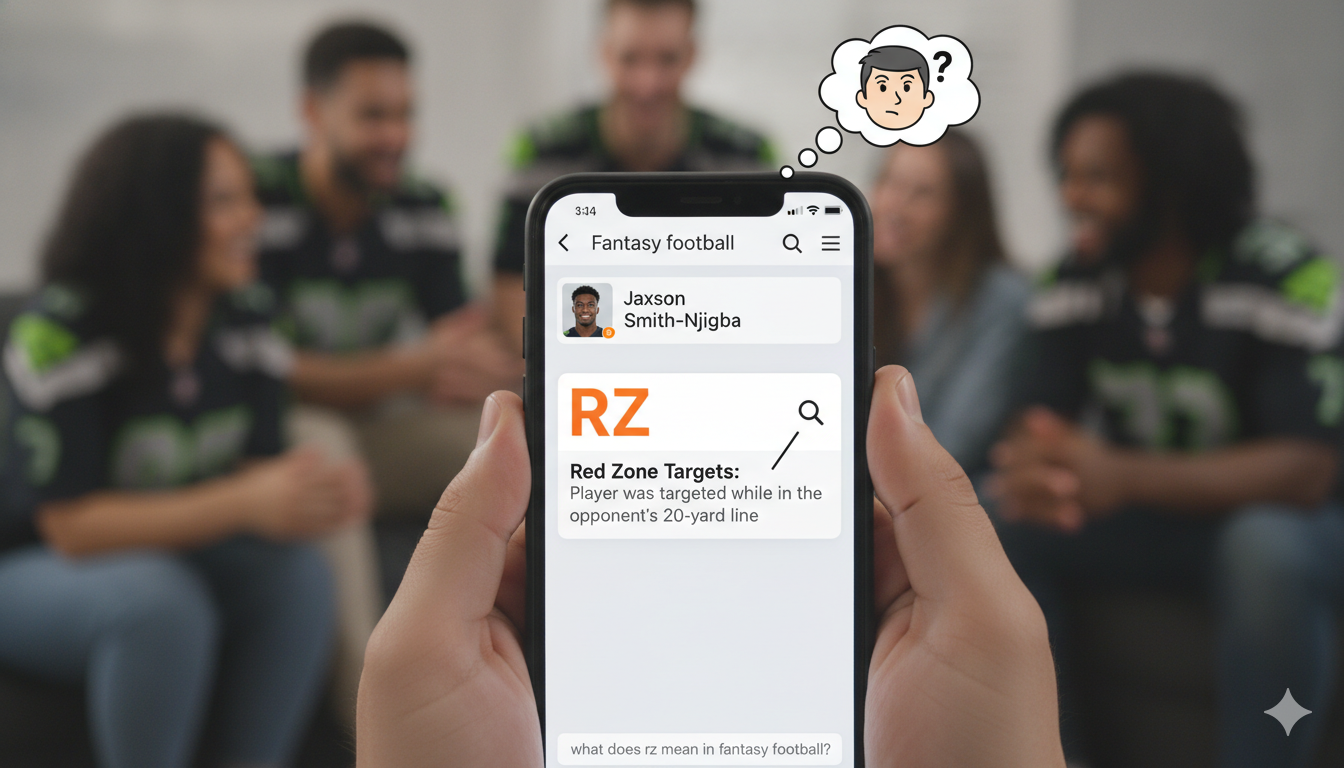
Fantasy football is a super fun game, but it has many confusing short words. You might look at your matchup app and see the letters “RZ” next to a player. If you are confused, you might ask, what does rz mean in fantasy football? You are not alone, as thousands of new managers ask this exact same question every single season.
Understanding these letters can help you win your fantasy league and beat your friends easily. This guide will explain everything about this important football term in a super simple way. We will look at why it matters for your roster, your weekly lineups, and your draft day choices. Let us dive in and learn how to use this stat like an absolute pro football analyst.
What Does RZ Mean in Fantasy Football App Displays?
When you see RZ on Yahoo, ESPN, or Sleeper, it stands for the Red Zone. The red zone is the area on the football field from the 20-yard line down to the opponent’s goal line. When a real NFL team gets this close, they are very likely to score a touchdown.
Fantasy apps put a little RZ icon next to a player’s name during live games. This means their real-life team is currently inside the opponent’s 20-yard line. It tells you to check your TV screen because your player has a high chance to score points right now.
Why the Red Zone Matters for Fantasy Scoring
The main goal in fantasy football is to score as many fantasy points as possible. Touchdowns are worth six big points, which is the highest single scoring event for any player. Since most touchdowns happen inside the 20-yard line, this area is a goldmine for fantasy managers.
Players who get the ball in this area are highly valuable assets for your fantasy team. If a player never gets the ball near the end zone, their chances of scoring drop significantly. Tracking this area helps you find the players who will score the most points each week.
Understanding RZ Targets for Pass Catchers
An RZ target means a quarterback threw a pass to a wide receiver or tight end inside the 20-yard line. These targets are very important for players who do not run for long yards. A tall wide receiver might get five targets near the end zone because they can jump high.
When you look at free agents, you should always check their RZ targets first. A player might have low total yards but high targets near the goal line. This makes them a secret weapon that your league mates might completely overlook on the waiver wire.
Understanding RZ Carries for Running Backs
For running backs, an RZ carry means they received a handoff inside the 20-yard line. Some running backs are called “bangers” or “goal-line backs” because they get these heavy touches. They use their strength to push through the defensive line for a short score.
If a running back gets ten carries near the goal line, they are fantasy gold. You want these players on your team because they have a high floor of weekly points. Avoid running backs who get benched as soon as their team gets near the scoring zone.
How to Check RZ Stats on Your Fantasy Platform
Most major fantasy platforms like ESPN, Yahoo, and Sleeper have built-in research tools for managers. You can filter player stats by clicking on the research or trends tab in your app menu. Look for columns labeled “Red Zone” or “RZ” to see historical data.
Checking these stats once a week will give you an edge over casual players in your league. You can see which players are getting opportunities even if they did not score last Sunday. It helps you make smart decisions based on real usage numbers rather than pure luck.
The Difference Between Inside the 20 and Inside the 5
Not all areas inside the 20-yard line are created equal for fantasy football success. A carry from the 19-yard line is much harder to score on than a carry from the 2-yard line. Analysts split these stats into “Inside the 20” and “Inside the 5” categories.
Touches inside the 5-yard line are the absolute most valuable plays in the entire game. If a quarterback or running back dominates touches inside the 5, buy them immediately. Those players are almost guaranteed to rank high in total touchdowns by the end of the year.
How to Use RZ Data for Trade Strategies
Smart fantasy managers use RZ data to pull off amazing trades that improve their rosters. You can look for players who have tons of red zone opportunities but zero touchdowns. This means they are experiencing bad luck and their breakout game is coming very soon.
You can trade for these players for a very cheap price from frustrated managers. This is called a “buy-low” strategy, and it works perfectly when backed by solid data. On the flip side, sell players who score long touchdowns but never see inside-the-20 action.
Setting Weekly Lineups Using RZ Matchups
Every week you have to choose which bench players to start in your lineup. Looking at how opposing defenses perform near their own end zone can help you choose. Some defenses are terrible at stopping teams once they cross the 20-yard line.
If your bench player is facing a defense that allows many scores, start them with confidence. They do not need 100 yards to be useful if they score two easy touchdowns. Always favor high-opportunity players in good matchups for your flexible lineup spots.
Impact of RZ Efficiency on Quarterback Value
Quarterbacks need to be highly efficient when the field shrinks near the end zone. There is less open space to throw the football, so defenses play much tighter coverage. Elite quarterbacks make quick decisions and throw accurate passes into tiny windows for scores.
A quarterback who throws interceptions near the goal line will hurt your fantasy team. Look for quarterbacks who run the ball themselves when they get near the scoring line. Rushing quarterbacks provide a beautiful cheat code because rushing scores are worth more points.
Mastering the RZ for Your Annual Drafts
During your fantasy football draft, you should build a core of high-volume scorers. Do not just look at a player’s total yards from the previous season. Look at how many times their team trusted them when it mattered most.
Drafting players on high-scoring offenses gives you more chances to see that RZ icon light up. Even a secondary wide receiver on a great offense can outscore a star player on a bad offense. Focus on opportunity, team quality, and green-zone usage to dominate your draft.
Detailed RZ Player Value Comparison
This table shows how different types of player usage affect their value when answering what does rz mean in fantasy football.
| Player Position | Action Type | Fantasy Value | Success Metric | Why It Matters |
| Running Back | Carry Inside the 5 | Ultra High | Touchdown % | Closest to the end zone for easy 6 points. |
| Wide Receiver | Target Inside the 10 | High | Catch Rate | High-pointing the ball over short cornerbacks. |
| Tight End | Fade Target | High | Height Advantage | Great mismatch against smaller safeties. |
| Quarterback | Designed Run | High | Rushing Yards | Rushing touchdowns are worth more than passing scores. |
| Running Back | Target Inside the 20 | Medium | Yards After Catch | Catches in space can beat linebackers easily. |
Frequently Asked Questions
Does RZ mean a player is injured or out of the game?
No, RZ has nothing to do with injuries or player health statuses. It simply means the player’s real-life team is currently inside the opponent’s 20-yard line. It is an exciting alert, not a bad piece of news for your team.
Which position benefits the most from RZ touches?
Running backs generally benefit the most because coaches love to run the ball near the goal line. It is a safer play with less chance of a turnover or interception. However, tall wide receivers and tight ends are also huge beneficiaries of these high-value plays.
Can a player get RZ points if they do not score a touchdown?
Yes, players still earn regular yards and reception points inside the 20-yard line. If a receiver catches a pass for 15 yards inside the area, you get those standard points. The RZ indicator just means a touchdown opportunity is highly likely to happen.
Where can I find free RZ stats for my fantasy research?
You can find free stats on websites like Pro-Football-Reference, FantasyPros, and NFL.com. Your fantasy app like Yahoo or ESPN also tracks these numbers inside the player profile tabs. You do not need to pay for expensive tools to get this basic data.
Is a red zone target worth more points than a regular target?
In standard scoring rules, a target inside the 20 is worth the same as any other target. The value comes from the fact that it is much more likely to turn into a touchdown. Touchdowns give you six points, which makes the target highly valuable.
Should I bench a player who does not get RZ targets?
You should not bench them immediately, but you should look for better options if possible. Players who rely only on long plays are very inconsistent week to week. It is always safer to start players who get regular looks near the end zone.
Conclusion
Now you know exactly what does rz mean in fantasy football and how to use it. It stands for the Red Zone, which is the most exciting area on the football field. Tracking targets and carries inside the 20-yard line gives you a massive advantage over your league rivals. You can find hidden free agents, win trades, and set perfect weekly lineups using this simple data. Start looking at these metrics today to guide your team straight to a championship trophy!
